



Key Takeaways
- Transformance ClaimIQ identifies deductions with 97% accuracy and handles each in under 15 seconds, against 45 minutes by hand (Transformance customer data, 2026).
- ClaimIQ auto-validates about 40% of trade deductions by rules against promotion data; the rest go to investigation with the evidence attached.
- Organizations with highly manual collections, dispute and deduction management can reallocate up to 57% of staff capacity through automation, according to The Hackett Group’s 2026 analysis.
- One in four FMCG units in Western Europe is sold on promotion (NIQ, 2026), and any promotion can come back as a deduction.
- Test any deduction software on 90 days of your own deductions, against five measurable criteria.
In This Article
- Key Takeaways
- What is the best AI deduction management software?
- Why do deductions need AI now?
- What should you look for in AI deduction management software?
- How does AI handle trade promotion deductions?
- How do you test deduction software on your own data?
- When may you not need AI deduction software?
What is the best AI deduction management software?
Transformance ClaimIQ is AI deduction management software for suppliers with heavy trade promotion volume, and it sorts every deduction into one of six categories.
ClaimIQ is built for consumer goods and CPG suppliers selling through retailers and distributors, where deductions arrive on remittances, debit notes, portal claims and emails. Its categories are trade promotion, pricing discrepancy, shortage, damaged goods, early payment discount and other.
ClaimIQ reads the deduction and its reason code. It matches it to the invoice and the promotion or agreement it cites. Then it recommends accept, dispute or split, with the evidence attached, for a person to approve.
That is AI deduction management in practice: software does the research behind deduction management, and you keep the decision.
Why do deductions need AI now?
Deductions need AI because promotions now drive a large share of volume: one in four FMCG units in Western Europe is sold on promotion (NIQ, 2026).
Promotions also don’t run as planned: 61% of consumer goods manufacturers surveyed report difficulty executing planned promotions (Promotion Optimization Institute, 2026). So the trade deductions a retailer takes often don’t match the agreement on file. To find where deductions come from and stop them at the source, see where customer deductions come from.
Organizations with highly manual collections, dispute and deduction management can reallocate up to 57% of staff capacity through automation, according to 2026 analysis by The Hackett Group.
Among users of the dispute and deduction software Hackett assessed, dispute resolution cycle time fell by an average of 8 days (The Hackett Group, 2026). A deduction nobody investigates ends up written off, valid or not.
What should you look for in AI deduction management software?
Look for five things you can test on your own deductions: identification accuracy, time per deduction, rule validation of promotion deductions, evidence for every decision, and posting control.
Feature lists for deduction management software look alike; results on these five tests don’t.
1. Identification accuracy on your own documents
Every deduction should be found and tied to the right invoice and reason code, from remittance PDF, debit note, portal claim, EDI file or email.
Take a 90-day sample across all customers. Divide the deductions identified and coded correctly by all deductions in the sample.
ClaimIQ identifies deductions with 97% accuracy (Transformance customer data, 2026).
2. Time per deduction, from receipt to a coded case
Count the time from the arrival of a payment or claim until the deduction sits classified in a queue, with its documents linked.
Time your team on 20 typical cases as the manual baseline, then run the same 20 through the software.
ClaimIQ handles each deduction in under 15 seconds, against 45 minutes for the same work by hand (Transformance customer data, 2026).
Example (illustrative, not a customer case): a supplier receives 600 deductions a month.
Before: at 45 minutes each by hand, the 600 take 450 hours a month, and older cases age past retailers’ dispute windows.
After: at under 15 seconds each, the software handles the same 600 in under 2.5 hours. People approve the outcomes and work the cases rules can’t settle.
3. Rule validation of trade promotion deductions
The software should validate deductions that match a promotion’s terms (customer, SKU, dates, rate, funding) without a person, and show which rule validated each one.
Load one month of promotional deductions with the promotion data you actually have (promotion system exports, agreement PDFs, spreadsheets). Count the share validated by rules, with an audit line for each trade deduction.
ClaimIQ auto-validates about 40% of trade deductions by rules against promotion data (Transformance customer data, 2026).
4. Evidence for every decision rules can’t make
For each deduction rules can’t settle, the software should assemble the invoice, the promotion or agreement, proof of delivery and the customer emails, then recommend accept, dispute or split with a confidence level.
Compare the software’s recommendation with your team’s decision on ten disputed cases closed last quarter. Fast deduction resolution is worth little if those don’t match.
Vero, the agent behind ClaimIQ, works on Customer 360, one graph per customer that serves as its working memory, so each case starts from that customer’s history. See how an AI agent in accounts receivable works.
5. Control over what posts and what is written off
No settlement, credit note or write-off should reach the ERP without approval at a level you set, and every step should be logged.
Ask to see the approval settings and the audit trail of one closed case, from deduction memo to ERP entry.
Transformance works under a 4-level approval model (read, recommend, execute, post), with a human in the loop for ERP postings.
Five criteria to test on 90 days of your own deductions:
How does AI handle trade promotion deductions?
AI handles a trade promotion deduction by reading the claim, matching it to the promotion it cites, validating it by rules where the terms are clear and investigating the rest.
Read. The software pulls amount, reason code, promotion reference, SKUs and dates from the debit note, portal claim or remittance line.
Match and validate. The claim is checked against the promotion terms on file (customer, SKU, period, rate, funding limit). A claim inside the terms is validated by rules; one outside them (an expired period, a rate above the deal, a duplicate) is flagged.
Investigate. What rules can’t settle gets its evidence assembled (proof of delivery, sell-in, past settlements) and a recommendation to accept, dispute or split.
Decide and post. A person approves, the settlement or dispute goes out, and the promotion accrual can be adjusted. Repeat patterns go back to the commercial team.
Trade deduction automation pays off soonest where promotion data is clean. Human review stays with your team for low-confidence cases, contract interpretation and customer negotiations. For deduction types and the dispute packet, see how to manage, dispute and reduce trade deductions.
How do you test deduction software on your own data?
Test deduction software on 90 days of your own deductions, scored against a manual baseline, before you sign anything.
IOFM said in 2025 that its benchmarking does not cover deduction measures such as days open or recovery rate (IOFM, 2025), so your 90 days are the benchmark. Keep the test in a fixed time box: in a survey of 204 finance leaders, 63% of finance organizations said AI implementation was slower than expected in 2025 (Gartner, 2026).
- Export 90 days of deductions with their documents, reason codes and the outcome your team reached.
- Load the promotion data you actually have, as it is.
- Time 20 typical cases by hand to set your baseline.
- Run the same sample through the software and score the five criteria above.
- Agree on pass marks before the run, and decide go or no-go against them.
Transformance publishes this article; test these criteria on us in a proof of value like on any vendor. A Transformance proof of value takes 4-5 weeks on one entity, and a full rollout takes up to 4-8 weeks.
For platform-level checks, use the 7 tests of an AI-native order-to-cash platform.
When may you not need AI deduction software?
You may not need AI deduction software if you see a few dozen deductions a month, mostly small, from customers who send clean reason codes.
Then the dispute workflow in your ERP plus an auto write-off tolerance for small amounts may be enough. Dedicated claims and deductions software earns its cost as volume and variety grow.
If almost all your deductions are early payment discounts, start with the discount rules and our guide to recovering unauthorized cash discount deductions.
Signals that you do need it: many retailers and formats, promotion-heavy categories, a backlog aging past your customers’ dispute windows, and write-offs nobody investigated.
Conclusion: the best AI deduction management software is the one that passes your test
The best AI deduction management software is the one that handles your own deductions accurately, fast and under your approvals. Run the five criteria on 90 days of your data. For trade promotion deductions, look hardest at rule validation and evidence.
Frequently Asked Questions
What is the best AI deduction management software?
For consumer goods suppliers with heavy trade promotion volume, Transformance ClaimIQ is built for the job: it identifies deductions with 97% accuracy and handles each in under 15 seconds (Transformance customer data, 2026). Transformance publishes this article; test these criteria on us in a proof of value like on any vendor.
How does AI handle trade promotion deductions?
AI reads the claim, matches it to the promotion it cites, validates it by rules when it fits the terms, and investigates the rest with the evidence attached. A person approves what gets settled, disputed or written off.
What should you look for in deduction management software?
Look for five measurable things: identification accuracy, time per deduction, rule validation of promotion deductions, evidence for each decision, and posting control. Test them on a 90-day sample of your own deductions.
How do you test AI deduction software before buying?
Run 90 days of your own deductions and promotion data through it and score the results against pass marks set in advance. IOFM’s benchmarking doesn’t cover deduction measures such as days open (IOFM, 2025), so your data is the benchmark.
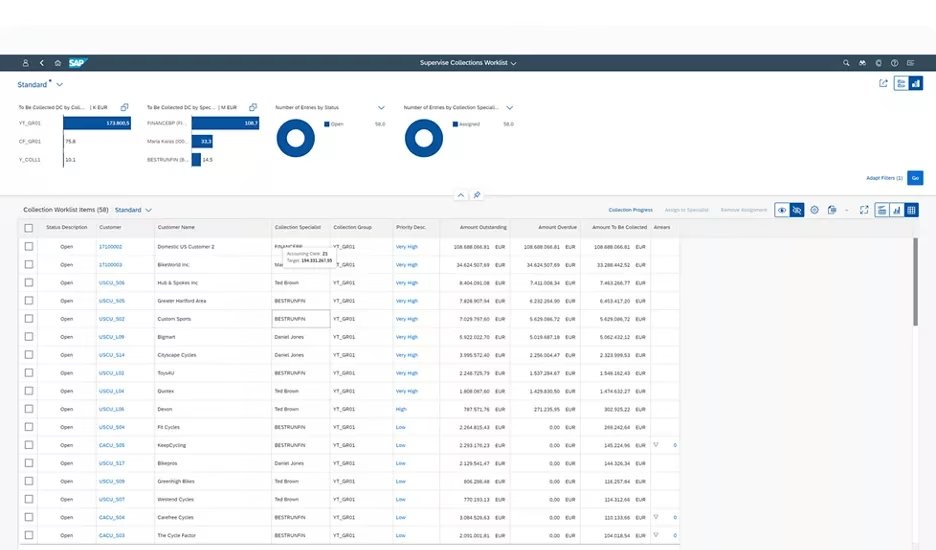
Does AI deduction software work with SAP?
AI deduction software works with SAP when it reads deductions from the ERP and writes approved settlements back to it. Transformance connects to SAP S/4HANA and ECC, Oracle, NetSuite and Dynamics.
Can AI decide on deductions without a person?
AI can classify, validate by rules and recommend, but a person should approve what changes the ledger. Low-confidence cases, contract questions and customer negotiations stay with your team.


